
How to Understand Your Child's Emotional Needs
How to Understand Your Child's Emotional Needs
Family Connection · FamlyKingdom
How to Understand Your Child's Emotional Needs
Every child is wired for one dominant emotional need. That need shapes how they receive love, how they react when things go wrong, and what makes them feel truly seen. When you know it, the guessing stops.
Most parents are present every day and still feel like they are aiming in the dark. They try more affection, more structure, more conversation, more space. Sometimes something lands. Often it does not. The problem is not effort. It is that they are working without the map.
Research by Tony Robbins, built on decades of work in human behaviour, identified six core emotional drivers that operate beneath every decision a person makes. These are not personality types. They are needs. And one of them tends to dominate in each person, shaping everything from how they handle conflict to what makes them feel close to you.
What Are the 6 Human Needs in Children?
The six needs are: Certainty, Variety, Significance, Love and Connection, Growth, and Contribution. Every child has all six, but one or two tend to lead. Here is how each one shows up in a child's behaviour:
Why the Same Words Work on One Child and Bounce Off Another
This is the question most parents are actually asking when they say they do not know how to reach their child. The answer is almost always the same: the words were written for the wrong need.
A child wired for Significance and a child wired for Certainty will respond completely differently to the same sentence. "I am proud of you" lands like a gift for a Significance child. For a Certainty child, what they actually needed was "here is what happens next."
Neither parent said the wrong thing. They said the right thing to the wrong need. Knowing which need leads in your child is what makes the difference between words that reach them and words that bounce.
"It confirmed exactly what I already thought about myself but gave me precise words to express it. That is the value. Not a revelation. The language for what I already knew."
Fermin, FamlyKingdom user, 10/10 would recommend
How to Identify Your Child's Dominant Need
There are two ways to do this. The first is observation over time. Watch what your child consistently reaches for, what they react to most strongly, and what they complain about when they are unhappy. The pattern usually points to one leading need.
The more accurate way is to let them tell you. Not through a quiz you fill out on their behalf, but through a conversation they have themselves. When a child answers questions in their own words, the dominant need reveals itself through what they choose to say, not what you guess about them.
This is what the Identity Blueprint Ceremony does. A guided AI voice conversation asks your child a handful of warm, age-appropriate questions, from 5 years old to adult, in English or Spanish. It listens to how they answer, not just what they answer. The result is a Blueprint built from their own words, not a type imposed from the outside.
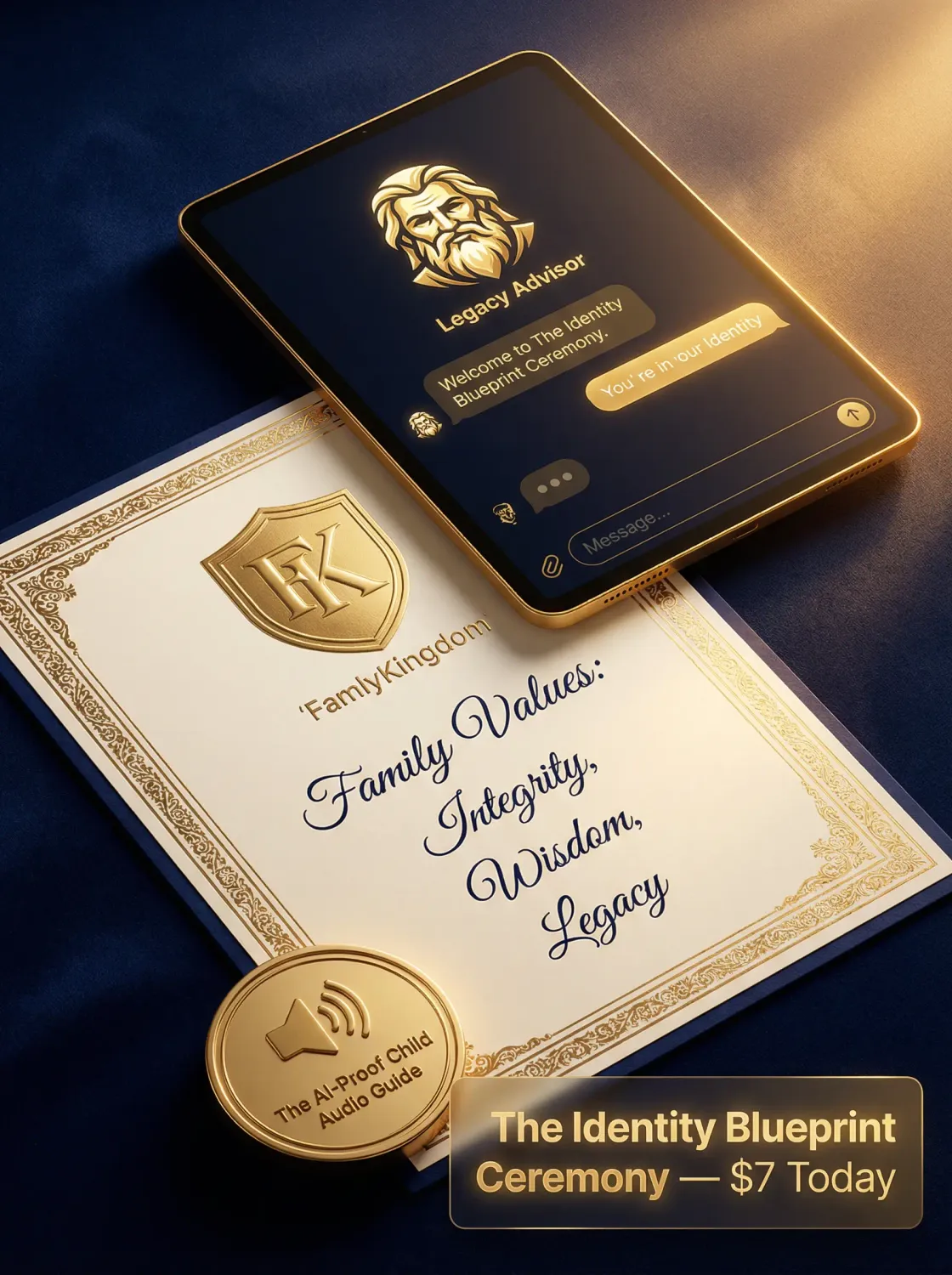
A real Identity Blueprint, showing the child's dominant need, three core strengths, and their legacy mission in their own words.
The Exact Phrases That Reach Each Type of Child
Once you know the dominant need, the language changes. Here are starting points for each:
These are starting points. The Blueprint takes this further by building the phrases from your child's own words, making them specific to this child rather than a general template for the need type.
What Changes When You Have the Map
Parents who complete the ceremony consistently report the same thing: not a revelation, but a language. They already sensed something about their child. The Blueprint gave them words for it, and with words comes the ability to act on it deliberately.
The hard moments do not disappear. The closed door still closes. But you know what to say when you knock.
Identity Blueprint Ceremony
Know your child's dominant need in 15 minutes.
A guided AI voice conversation lets your child reveal it in their own words, and hands you the exact phrases that reach them. For ages 5 to adult, in English and Spanish.
Get the Blueprint, $7Or try the free 2-minute quiz first.
Frequently Asked Questions
How do I know which of the 6 Human Needs my child has?
The most accurate way is to let your child tell you through a guided conversation. Observation helps, but children reveal their dominant need most clearly through how they answer open questions about what matters to them, what frustrates them, and what makes them feel close to you.
Can a child have more than one dominant emotional need?
Yes. Most people have a primary and a secondary need that both shape their behaviour. The Blueprint maps both, along with the full spectrum of all six, so you have a complete picture rather than just a single label.
What age can a child do the Identity Blueprint Ceremony?
From age 5 upward. The ceremony adapts its language and question depth to the child's age group, so a 5-year-old and a 15-year-old each get a conversation appropriate to them. It works in English and Spanish.
Is the 6 Human Needs framework based on research?
The 6 Human Needs framework was developed by Tony Robbins based on decades of work in human behaviour and coaching. It draws on the foundational work of Abraham Maslow and others in human motivation research, and has been applied in therapeutic, educational, and coaching contexts worldwide.


© Created with systeme.io